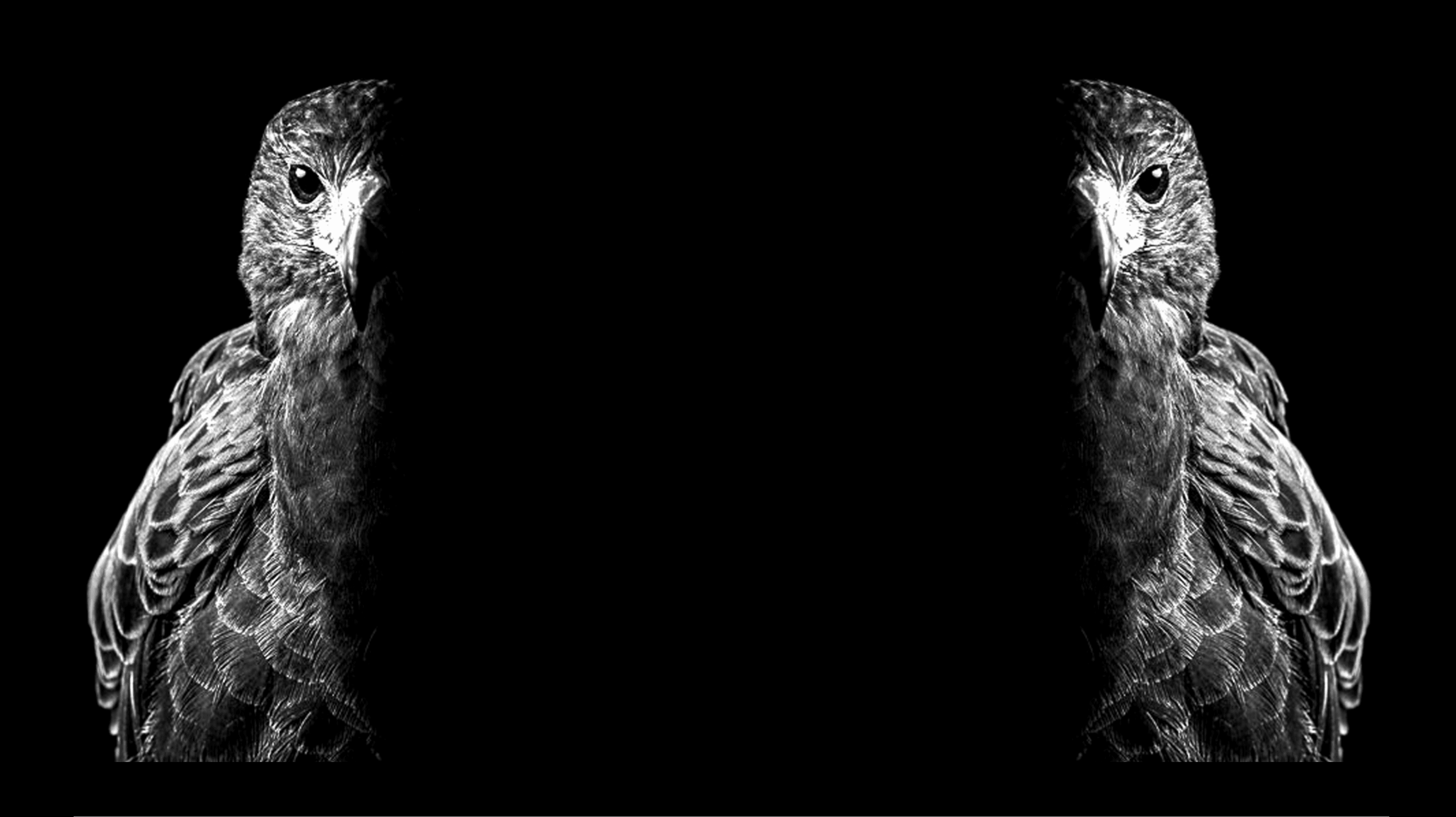
Prologue
The Foundation | More than a Guild
The history of the Knights of Shadowhawk is not the history of a single game.
It is the history of a banner carried from world to world, through victories and defeats, friendships and rivalries, flourishing communities and dying servers. It is a history shaped by competition, but sustained by something far more enduring: loyalty to one another.
For more than two decades, campaigns have come and gone. Servers have closed, worlds have emptied, communities have fractured, and entire eras of online gaming have passed into memory. Yet the Knights of Shadowhawk have remained.
The names have changed. The battlefields have changed. Generations of Knights have come and gone.
The banner has endured.
The Beginning
2003 | The Code of the Forgotten Ways
Everquest
The story of the Knights of Shadowhawk begins in early 2003, in the lands of Norrath.
On the server of Sullon Zek, one of the game's notoriously unforgiving player-versus-player worlds, Rowena Shadowhawk and Spellhawk Doombringer (Crighton Shadowhawk) founded a guild known as the Code of the Forgotten Ways.
Sullon Zek was not an easy place to thrive, let alone build a community.
The server was defined by faction warfare, open conflict, rivalries, deception, betrayal, and the constant threat of combat. The environment rewarded strength and ruthlessness, and the PvP culture often encouraged players to abandon courtesy entirely.
The Code of the Forgotten Ways chose a different path.
From its earliest days, the guild sought to prove that competitiveness and character were not mutually exclusive. Its members pursued victory aggressively while maintaining standards of loyalty, respect, and fair play that often contrasted sharply with the environment around them.
Those ideals were not limitations. They became an identity.
The guild quickly developed a reputation for collaborative tactics, capable PvP players, and an unusual degree of loyalty among its membership. But what truly distinguished the Code of the Forgotten Ways was the community being built behind the characters.
Members did not simply log in together. They became friends.
New recruits became trusted companions. Guildmates became real-life friends. Relationships born through battles in Norrath continued beyond the game, often times for decades.
Even rivalries were rarely simple hatred. Some of the strongest relationships formed by the guild came through repeated conflict with players who stood on the opposite side of the battlefield. Enemies could become respected adversaries, allies, and eventually friends.
In one of the harshest PvP environments available in the golden MMO era, the Code of the Forgotten Ways discovered something that would define everything that followed: A guild that could fight without abandoning its principles.
The ethics of those "forgotten ways" became the foundation upon which the Knights of Shadowhawk would eventually be built.
The Creation
2005 | The Knights of Shadowhawk
Everquest
In March 2005, the landscape of EverQuest PvP changed forever.
The four PvP servers, Rallos Zek, Sullon Zek, Tallon Zek, and Vallon Zek, were merged into a single server simply named Zek with a +4/-4 level open world PvP with no sides and no restrictions.
Suddenly, communities that had developed independently for years were thrown together.
Old rivalries collided.
New alliances formed.
Guilds that had once dominated their individual servers now found themselves surrounded by challengers with reputations of their own.
For the Code of the Forgotten Ways, the merger represented something larger than a server transfer.
It was an opportunity to band together with allies and foes alike, against new enemies.
Under the leadership of the charismatic and famously sharp-tongued Rowena Shadowhawk, the guild expanded its vision. Friends, allies, veterans, and former rivals could now be brought together beneath a single banner.
From that convergence, the Knights of Shadowhawk were born.
The new guild retained the principles that had guided the Code of the Forgotten Ways: loyalty to one another, respect earned through action, competition without corruption, and the belief that the people behind the characters mattered more than any individual victory.
But the Knights of Shadowhawk were not formed merely to socialize.
They intended to fight.
And fight they did.
War on Zek
2005-2014 | A Legacy Born
Everquest
Under Rowena's leadership, the Knights of Shadowhawk developed into one of the more aggressively PvP-oriented guilds in the Zek community. The guild gained a reputation that was not always comfortable.
KoS could be respected.
KoS could be feared.
KoS could be hated.
Often, it was all three at once.
The Knights built their namesake through persistent PvP, loyalty to their members, battlefield coordination, and an unwillingness to surrender their standards simply because their opponents ignored them.
Among those standards was one rule that became increasingly important as the years progressed:
No hacking.
In an environment where illicit programs, exploits, and other forms of cheating could dramatically influence PvP, the Knights of Shadowhawk maintained an uncompromising stance against gaining victory through fraudulent means.
Skill was supposed to mean something.
Victory was supposed to mean something.
A reputation built through cheating was no reputation worth having.
This conviction was one of the recurring foundations that laid the foundation the Knights of Shadowhawk would build its history upon.
Years after leaving EverQuest, the Knights would once again encounter worlds in which the integrity of PvP was compromised.
And each time, the response would be remarkably similar.
If the battlefield itself ceased to be honorable, the Knights would find another battlefield.
Beyond the Game
2006 | The Annual Guild Party
While PvP established the Knights of Shadowhawk's reputation, it was never the sole reason the guild endured.
The bonds forming within the community increasingly extended beyond EverQuest.
Eventually, the idea of a real life gathering was forged.
From those meet ups came one of the Knights of Shadowhawk's longest-running traditions: the annual Guild Party.
Over the years, Knights traveled to spend weekends together filled with food, drinks, karaoke, gaming, PvP contests, stories, and the inevitable retelling of battles whose details became increasingly exaggerated with every passing year.
Characters became voices.
Voices became faces.
Guildmates became lifelong friends.
The guild was no longer simply an organization within EverQuest.
It was a community extending inside and outside of the game.
At the time, that distinction may not have seemed particularly important.
Years later, it would become the reason the Knights of Shadowhawk survived.
The End of an Era
2014 | The Departure
Everquest
Nothing lasts forever.
By 2014, the PvP environment that had sustained the Knights of Shadowhawk for more than a decade had deteriorated dramatically.
Rampant cheating increasingly undermined competitive play. PvP balance received little meaningful attention from the developers, and the population of the server continued to decline.
The world in which KoS had been forged was dying.
Eventually, the guild reached the same conclusion collectively:
There was little battlefield left worth fighting for.
The Knights of Shadowhawk remained in Norrath until shortly before the release of EverQuest's twenty-first expansion, The Darkened Sea, in October 2014.
Then, after more than a decade, they walked away.
There was no grand final ceremony.
There was no formal proclamation that the EverQuest era had ended.
There was no meticulously planned migration to another MMO.
Rowena remained the leader through the guild's final days in Norrath, and when the Knights dispersed, leadership did not change hands through an official succession.
Instead, the transition happened naturally.
As KoS moved between games, Vespur Shadowhawk (Shank Nemesis) increasingly became the person organizing its official outings and carrying the guild forward. Rowena remained part of the community and would continue to participate when particular games interested her, but she gradually withdrew from active leadership.
Crighton remained considerably more active in maintaining the guild's presence, frequently carrying the Knights of Shadowhawk name into the games he played and taking leadership roles where needed.
There was no single moment when one age ended and another began.
The old guard simply started handing the banner forward.
And Shank kept picking it up.
The Search for Glory
2014 - 2020 | The Wandering Years
Leaving EverQuest created a problem the Knights of Shadowhawk had never truly faced.
For more than a decade, the guild and the game had been inseparable.
Norrath had provided nearly everything KoS valued: dangerous open-world PvP, meaningful rivalries, guild politics, character progression, teamwork, reputation, and a world large enough for individual communities to matter.
Now the Knights had to answer a difficult question:
What could possibly replace it?
For the next several years, the Knights of Shadowhawk wandered.
Some games became official guild outings.
Others were little more than groups of friends gathering temporarily beneath a familiar banner.
Many were enjoyable.
None were home.
Rift
2014 - 2015 | A New Campaign
Rift
One of the first destinations following EverQuest was Rift.
From approximately 2014 through 2015, the Knights of Shadowhawk maintained an active guild presence and participated regularly in PvP.
The game provided a new campaign and new competition, but its PvP environment was far smaller in scale than the warfare the guild had grown accustomed to.
Combat frequently emphasized individual players and small engagements rather than the large-scale guild conflict that had defined life on Zek.
KoS enjoyed the game for what it was.
But Rift never felt capable of replacing EverQuest.
Eventually, the Knights moved on.
The search continued.
Neverwinter
2015 - 2016 | Another Frontier
Neverwinter
The next major campaign brought the Knights to Neverwinter.
From approximately 2015 through 2016, KoS established itself more seriously than it had in Rift, placing significant emphasis on the development and progression of the guild's Stronghold.
Neverwinter proved entertaining and gave the Knights meaningful goals to work toward together, particularly through Stronghold progression.
Yet PvP once again proved disappointing.
Outside of its structured arenas, the game offered little of the world-driven conflict KoS desired. Worse, competitive PvP increasingly became associated with systems heavily tied to a pay-to-win structure.
For a community whose identity had always emphasized genuine skill, the appeal faded quickly.
Neverwinter had its good memories.
It simply did not offer a world KoS could imagine inhabiting for another decade.
Once again, the Knights of Shadowhawk packed the banner in search for a new home.
Guild Wars 2
2016 - 2018 | A World without a War
Guild Wars 2
From approximately 2016 through 2018, the Knights of Shadowhawk made their next serious attempt to establish themselves within an MMO through Guild Wars 2.
Once again, many familiar Knights answered the call.
KoS established a Guild Hall, participated in the game's large-scale world events, progressed alongside one another, and became active in World versus World combat.
On paper, WvW seemed capable of providing exactly the kind of large-scale PvP the guild had been searching for.
In practice, it was something different.
The enormous battles were often dominated by "zerg" tactics: huge collections of whatever players happened to be online moving collectively from objective to objective.
Individual guild tactics certainly had their place, but the battlefield rarely created the same sense of identity, rivalry, or accountability that KoS had experienced in EverQuest.
The Knight fighting beside you today might never be seen again.
The enemy across the battlefield might simply be one name among hundreds.
For KoS, PvP had always been about more than killing another player.
It was about knowing who you were fighting.
The stories mattered.
The rivalries mattered.
The reputation mattered.
Guild Wars 2 struggled to provide that same sense of consequence.
Meanwhile, the game's commitment to horizontal progression increasingly left the Knights with little incentive to continue building their characters beyond the content already completed. Later expansions brought new adventures and exploration, but much of the experience increasingly felt oriented toward individual questing rather than the guild-centered MMO experience KoS desired.
After several years, the conclusion became familiar.
Guild Wars 2 was a good quest.
It was not the next campaign or conquest for the Knights of Shadowhawk.
A Guild without a World
2018 | Discord
While KoS struggled to find a permanent world, something far more important was happening outside of any particular game.
On June 22, 2018, the Knights of Shadowhawk Discord server was created.
There was no grand plan to revolutionize guild operations.
Discord simply proved useful.
At first, it became another place for friends to gather.
Then, Veteran Knights started being rediscovered.
Guild history could be preserved.
Screenshots could be archived.
Stories could be recorded.
Announcements could reach people regardless of which game they currently played.
Channels could increasingly resemble the old forums and community spaces that had once surrounded EverQuest.
Gradually, something changed.
KoS no longer needed to exist inside a particular MMO.
The MMO could exist inside KoS.
Discord had evolved naturally into the guild's operational headquarters.
It was the place from which campaigns could be organized.
It was where Veterans could return after years away.
It was where new members could become part of the community even after the game that recruited them had faded.
The Knights had finally developed a permanent home.
For the first time in their history, that home was not a game server.
It was the guild itself.
Rise of Zek
2020 | The Banner is Seen Again
Everquest | Rise of Zek
The Rise of Zek project originally launched on June 29, 2018 as a classic-inspired EverQuest PvP progression server.
Its philosophy immediately echoed the environment from which KoS had been born.
Rise of Zek sought to recreate much of classic EverQuest while making measured balance changes appropriate for PvP. It offered a restricted PvP level range, item loot, corpse and loot-and-scoot rules, restricted boxing, classic-inspired progression, and an emphasis on transparency intended to reduce corruption and administrative abuse.
Although the Knights did not participate in the original 2018 launch, KoS joined the Rise of Zek 2.0 era around October 2020.
Almost immediately, something different happened.
People recognized the name.
Old allies returned.
Old enemies noticed.
Veterans who had disappeared into the wider gaming world began finding their way back beneath the banner.
Others followed.
Alongside them came new generations were able to experience the Knights of Shadowhawk.
For the first time since leaving EverQuest, the Knights were not simply preserving their old identity.
They were expanding it again.
Rise of Zek restored something that had been absent throughout much of the wandering era.
Reputation mattered.
Guild names mattered.
PvP had consequences.
Players knew who they were fighting.
The old ecosystem of friendships, grudges, alliances, and rivalries began reappearing almost immediately.
The Knights were home in Norrath again.
But more importantly, Norrath was beginning to remember the Knights.
KoS played actively through the Rise of Zek 2.0 progression until the server's population eventually declined around the Planes of Power era.
The world faded.
This time, however, the KoS community did not fade with it.
The name the guild had rebuilt within the PvP emulator community led directly to the next chapter.
The Knights were invited to help shape another battlefield.
Reign of Thule
2021 | The Forerunners
Everquest | Reign of Thule
In early 2021, development was underway on Reign of Thule, a "true classic" EverQuest PvP emulator heavily inspired by the philosophy of Red99.
Its rules immediately appealed to the Knights of Shadowhawk.
Classic progression.
Single-box gameplay.
Slow advancement.
Classic experience rates.
And most importantly, a return to the faction warfare that had defined the earliest days of KoS:
Good. Neutral. Evil.
For the Knights of Shadowhawk, it was almost a return to Sullon Zek.
KoS entered the Reign of Thule Beta beginning in approximately March 2021 and quickly became one of the most important organizations within the Neutral faction.
The Knights did considerably more than simply play.
With the project relying heavily on a small development team and a lone primary developer, members of KoS committed countless hours to testing content, reporting bugs, identifying broken systems, evaluating PvP interactions, and helping prepare the server for release.
Those who contributed and reached level 50 in the beta were awarded the permanent title:
the Forerunner.
The name was fitting.
The Knights were not merely waiting for the world to open.
They were helping build the road into it.
KoS's contributions to the Beta did not go unnoticed.
Alongside the Forerunner titles, several important contributors to the project were memorialized within the game world itself.
Among them was Shank.
An NPC modeled directly after Shank's character was placed into the world alongside representations of the server owner, contributors, a developer, a loremaster, and another notable tester.
For a player whose guild had begun in EverQuest nearly two decades earlier, the symbolism was difficult to ignore.
The Knights had returned to a recreation of the world that created them.
And now, one of their own had literally become part of that world.
Following the Beta period from March through May, Reign of Thule officially launched in June 2021.
KoS entered the live server as one of the most established forces of the Neutral team.
The guild's role extended beyond simply leveling characters.
The Knights operated as leaders within the Neutral faction, helping organize Neutral players, participated actively in PvP, and once again became embroiled in the politics and rivalries that had always made team-based EverQuest PvP compelling.
These rivalries restored something KoS had spent years seeking.
Enemies had names again.
Guilds had identities.
Actions produced reputations.
Victories and losses followed players beyond a single match.
For a brief period, the Knights of Shadowhawk had found an environment that genuinely resembled the world they had lost.
But old problems have a way of returning.
As Reign of Thule progressed through the Kunark era, relations between KoS and the project's leadership deteriorated.
The guild became increasingly concerned about what it viewed as favoritism from the lead developer toward a particular player who stood directly opposed to KoS.
More serious, however, were concerns that hacking or illegitimate advantages in PvP were being permitted or ignored.
For the Knights of Shadowhawk, the issue struck at an old wound.
Years earlier, rampant cheating and a lack of meaningful PvP support had helped drive KoS away from EverQuest after more than a decade.
Now, after contributing countless hours to testing Reign of Thule, helping organize its Neutral faction, reaching maximum Beta level, achieving a server-first raid kill, and even being permanently memorialized within the world, the guild once again faced the same fundamental question:
What is victory worth if the battlefield itself cannot be trusted?
KoS made the same choice it had made before.
The Knights walked away.
The decision was costly.
KoS had invested deeply in the server.
That investment did not matter more than its principles.
For the second time in its history, the Knights chose to leave a version of Norrath rather than accept a PvP environment they believed had lost its integrity.
The parallel was unmistakable.
The world had changed.
The standard had not.
A Fire in the Distance
2021 | Ashes of Creation
Ashes of Creation
While the Knights were still rediscovering themselves through the EverQuest emulator community, another possibility appeared.
In January 2021, Ashes of Creation and the Lands of Verra were discovered
Its promises of large-scale warfare, meaningful guild conflict, player influence over the world, territorial struggle, economy, politics, and a world capable of being changed by the actions of its inhabitants sounded remarkably similar to the qualities KoS had been chasing since leaving EverQuest.
Perhaps, finally, there was a true successor on the horizon.
There was only one problem.
It was years away.
With Ashes of Creation still deep in development, the Knights began searching for another battlefield to conquer while they waited.
Shortly thereafter, another new world was spotted on the horizon.
At first, it looked like an interesting diversion.
Instead, it would change the Knights of Shadowhawk forever.
A New Challenge
2021 | Rebirth of a Legacy
New World
New World offered nearly everything KoS had been missing.
Faction conflict.
Open-world PvP.
Territory ownership.
Sieges.
Large-scale warfare.
Player-driven politics.
Economic control.
Crafting and commerce.
Guilds capable of becoming actual powers within their servers.
After years of wandering through worlds where the individual player often mattered more than the guild, New World placed organized companies directly at the center of its systems.
The Knights entered Aeternum with ambition.
What they did not have was an army.
There was no enormous mobilization of EverQuest Veterans.
There was no battle-tested force waiting at launch.
There was no massive recruitment campaign prepared months in advance.
When New World launched on September 28, 2021, the Knights of Shadowhawk entered with four members:
Shank
Antipaladin
Sezzerous
Hondo
Four Knights.
One banner.
And a world that had never heard their name.
That was about to change.
New World
2021 - 2023 | Aeternum
New World
The Knights of Shadowhawk joined the Heliopolis server and aligned themselves with the Syndicate.
The guild entered New World with experience far beyond its numbers.
Shank had spent years gradually assuming leadership of KoS.
Antipaladin and Sezzerous had developed into major leadership figures during the later wandering years.
Hondo had served as an officer across nearly every major campaign he participated in.
Together, they represented decades of accumulated guild leadership, PvP experience, political instincts, and organizational knowledge.
New World immediately tested all of it.
The Syndicate on Heliopolis was divided.
Disagreements over territory, wealth, strategy, and leadership created tensions between its companies. Rival factions applied pressure from outside while political disputes threatened the faction from within.
Shank increasingly found himself positioned between competing interests.
He became a liaison not merely between Syndicate companies, but at times between the Syndicate and the two other enemy factions.
His approach emphasized a quality that had followed KoS since the earliest days of Sullon Zek:
Be competitive.
Be fair.
And hold each other to a higher standard.
That reputation began drawing people toward the Knights of Shadowhawk.
The guild rapidly grew.
And then it grew again.
What began with four Veterans became the largest incarnation of Knights of Shadowhawk in the guild's history.
For the first time since EverQuest, KoS was not simply participating in an MMO.
It was becoming part of that world's political landscape.
Heliopolis
2021 - 2022 | The Crusade
New World
Heliopolis soon encountered serious economic and population problems.
The major trade centers of Everfall and Windsward stagnated, creating an opportunity for another territory to become something more.
The Knights of Shadowhawk turned their attention north to Brightwood.
On November 10, 2021, KoS seized control of the territory.
What followed became one of the defining campaigns of the guild's post-EverQuest history.
The Knights transformed Brightwood into the most successful settlement on Heliopolis and the major center for crafting and commerce.
Ownership also painted a target on the guild.
KoS defended Brightwood against 32 siege attempts.
The settlement also successfully conquered 19 invasion defenses under the guild's stewardship.
Week after week, challengers came.
Week after week, the Knights held the walls.
Brightwood was no longer simply a territory controlled by KoS or the guild's fortress.
It had become a central hub of the entire server.
Success created opportunity.
On December 19, 2021, the Knights of Shadowhawk successfully acquired First Light while simultaneously maintaining their defense of Brightwood.
The guild now controlled two territories.
First Light would subsequently be defended another six times, including five occasions in which its defense occurred in conjunction with the defense of Brightwood.
The logistics alone tested the guild's organization.
KoS had to coordinate rosters, equipment, command structures, siege preparation, diplomacy, and the availability of players across multiple simultaneous conflicts.
For a guild that had entered New World with four people only months earlier, it was an extraordinary transformation.
The Knights had rediscovered what they had been searching for since 2014:
A world in which guild organization mattered.
KoS's influence was not limited to defending its own territories.
On one notable occasion, Shank entrusted the defense of Brightwood to his Consuls while personally leading the offensive for a fellow Syndicate company attempting to seize Windsward.
The operation succeeded.
Similar opportunities followed.
Shank would again help lead successful offensive campaigns for Monarch's Bluff and Ebonscale Reach.
The victories demonstrated something fundamental about the Knights of Shadowhawk's role on Heliopolis.
KoS was not merely defending its property.
The guild had become part of the strategic infrastructure of its faction.
The same instincts that had made the Knights dangerous in EverQuest had translated into a completely different generation of MMO.
After years of searching, the Knights had finally proven that their old reputation was not simply nostalgia.
It was a legacy that could be built again.
The Fall of Brightwood
2022 | A Broken Battlefield
New World
For all the promise New World showed, its greatest enemy was not another faction.
It was the game itself.
Aeternum was plagued by bugs, duplication exploits, gold-selling, economy-breaking loopholes, and repeated failures in systems that were supposed to make wars meaningful.
For a guild like the Knights of Shadowhawk, whose identity had always depended on the belief that competition should be earned, the problems were more than technical annoyances.
They threatened the legitimacy of the entire battlefield.
The most devastating example came during the defense of Brightwood.
By that point, KoS had transformed Brightwood into the most successful settlement on Heliopolis. The city had become a central hub for commerce and crafting, defended repeatedly against challengers and maintained through extensive organization, planning, and discipline.
Eventually, however, the territory was attacked by an enemy force willing to exploit a server-side issue involving the Ice Gauntlet.
The exploit could overwhelm the server during war, causing severe freezing and instability for players attempting to contest control points.
While the defending force struggled against a completely unresponsive game, attackers could continue progressing control over objectives that could no longer be meaningfully contested.
Brightwood fell.
Not because KoS had been defeated through superior tactics or skill.
Not because another company had organized a better offenive strike.
Not because the Knights had failed to prepare.
The battlefield itself had stopped functioning.
What followed only deepened the frustration.
Immediately after securing Brightwood through the exploit, members of the victorious side began calling for a ceasefire on the very tactic they had just used.
The message was that the server community should collectively agree never to use the exploit again.
Only after Brightwood had changed hands.
For KoS, the hypocrisy was difficult to ignore.
A standard was being proposed only after those proposing it had already benefited from violating it.
The consequences extended far beyond the loss of a territory.
Under KoS stewardship, Brightwood had become the strongest commercial centers on Heliopolis.
Its success depended on more than simply owning the settlement.
Territory management required defending invasions, maintaining upgrades, protecting crafting stations, managing taxation, supporting the economy, and keeping enough players engaged to sustain the city.
After Brightwood changed hands, its new leadership failed to maintain that same momentum.
Subsequent invasions were lost.
Infrastructure deteriorated.
Crafting stations declined.
The city that had once acted as one of Heliopolis' most important centers of commerce rapidly diminished.
Brightwood had been taken.
But it was not preserved.
For many on the server, that collapse became symbolic of a larger problem.
The wars that were supposed to determine political power increasingly felt vulnerable to exploits, technical failures, and whatever unintended mechanic had not yet been patched.
Meanwhile, duplication scandals, illicit gold, gold selling, and other economic problems continued undermining confidence in the world around them.
Players began leaving.
Then more followed.
Heliopolis entered a mass exodus.
The population that had already been struggling began collapsing further as players lost faith that their accomplishments would remain meaningful.
For KoS, the situation felt painfully familiar.
EverQuest had eventually become unworthy of serious PvP because cheating and neglect destroyed confidence in the competition.
Reign of Thule had suffered a similar fate when the guild believed developer bias and tolerated exploitation compromised the integrity of its battlefield.
Now New World, the first MMO since EverQuest that had truly felt capable of becoming a home for the Knights, was succumbing to many of the same problems.
The circumstances were different.
The principle was not.
KoS could tolerate defeat.
KoS could tolerate setbacks.
KoS could tolerate losing territory.
What could not be tolerated was competition in which the rules themselves could no longer be trusted.
As Heliopolis emptied and confidence in the game continued to deteriorate, the Knights of Shadowhawk stepped away from Aeternum.
For a time, it appeared that New World had become another promising world lost to its own failures.
But the Knights were not finished with it yet.
Lillith
2022 - 2023 | A Fresh Start
New World
New World offered something the guild had not expected:
A second beginning. A fresh start.
The introduction of Fresh Start servers created an opportunity for players to begin again on newly created worlds where established economies, accumulated wealth, and old server politics could not simply carry over.
For KoS, it was an invitation to test something important.
Could the guild reproduce what it had accomplished on Heliopolis?
Or had that success been a product of circumstance?
This time, the Knights did not enter with four people.
They entered with an army.
KoS joined the Fresh Start server of Lilith with approximately eighty-five members prepared to begin the campaign together.
The number would eventually grow to roughly one hundred and twenty members.
It was a dramatic contrast to the beginning of the original New World campaign.
On Heliopolis, four Veterans had entered an unknown server and built the largest incarnation of KoS in its history.
On Lilith, that organization now arrived on day one.
The banner was no longer unknown.
The guild was no longer improvising its structure as it grew.
KoS entered with established leadership, experience in territorial warfare, practiced communication, recruitment systems, tactical discipline, and lessons learned through every success and failure of the previous campaign.
The Knights intended to prove that Heliopolis had not been an accident.
They did so almost immediately.
Territory control became one of the earliest races of the Fresh Start server.
Companies leveled rapidly, gathered resources, accumulated influence, organized their players, and fought to establish the political map before rival factions could do the same.
KoS moved aggressively.
The result was historic.
The Knights of Shadowhawk secured Everfall as the first territory claimed on the Lilith server.
For a guild whose first New World campaign had begun with only four players, the achievement represented an extraordinary evolution.
Everfall was not merely another settlement.
Historically, Everfall was New World's most important economic and centrally located political territories.
Its location and accessibility made it naturally attractive to players, and ownership of the settlement immediately placed its governing company at the center of the young server's development.
As the political landscape of Lilith developed, the guild expanded its territory.
The Knights successfully captured Monarch's Bluff, making it the third territory claimed on the server and the second territory controlled by the Syndicate faction.
Once again, KoS found itself responsible for multiple settlements.
Once again, the guild faced the organizational demands that came with territorial control.
And the interests of more than one hundred members had to be balanced against the strategic demands of the wider server.
The campaign repeated many of the patterns that had made KoS successful on Heliopolis.
When the game's systems functioned properly, KoS once again demonstrated that it could compete with the strongest organized groups on its server.
The Fresh Start experiment had answered the original question.
Heliopolis had not been luck.
KoS proved it could build and conquer once again.
Unfortunately, the problems that had driven the Knights away from New World the first time had not disappeared.
The fresh start reset the economy, the characters, the political map, but tt did not reset the game itself.
Bugs, exploits, unintended mechanics, and balance problems continued to influence competitive play.
Once again, wars could be affected by issues that existed outside the preparation and skill of the companies fighting them.
For KoS, the frustration was compounded by the fact that the guild had now invested even more deeply in the game.
Lilith was not an experimental campaign or a distraction attempt.
The Knights had entered with eighty five people and grown to roughly one hundred and twenty.
They owned territory.
They had built infrastructure.
They had developed leaders.
They had once again created a community large enough to become a leading company of the server.
External problems tested the guild.
Then an internal one tested it even more severely.
During the Lilith campaign, KoS incorporated a smaller guild into its organization.
At first, the merger appeared capable of strengthening the guild.
It added players, expanded the community, and offered the possibility of bringing another established group into the structure KoS had spent years building.
Instead, it became one of the most significant leadership challenges of the New World era.
Members of the incorporated group began operating against the interests of KoS.
Rather than integrating into the guild, a competing power structure developed within its ranks.
Confidence in KoS leadership was challenged.
Members were encouraged to leave.
Guild resources were misappropriated.
Money was taken from the company treasury.
The individuals responsible believed they could take members of KoS and build something better under their own leadership.
For a guild that had spent twenty years surviving external rivals, server collapses, changing games, and fractured communities, the challenge was fundamentally different.
This opponent wore the same banner.
The situation forced KoS leadership to confront one of the most difficult realities of running a large gaming community: betrayal.
Growth creates strength.
But unchecked growth can also create vulnerabilities.
A guild of twenty trusted players operates differently from a guild of one hundred and twenty.
Delegation becomes necessary.
Access must be granted.
Responsibilities have to be distributed.
New leaders must be trusted with resources, information, and influence.
That trust can be honored.
It can also be abused and betrayed.
The Lilith campaign became a lesson not simply in warfare, but in governance.
The attempt to fracture KoS did damage.
Resources were lost.
Trust was tested.
The guild was forced to reassess how leadership authority, treasury access, recruitment, internal organization, and membership integration should operate with expansive growth.
Yet the trial demonstrated something the Knights had repeatedly learned throughout their history.
A guild cannot be defeated by stolen resources or political subterfuge.
A treasury is not a guild.
A territory is not a guild.
A Discord server is not a guild.
The identity of the Knights of Shadowhawk is its people.
The experience left scars, but it also forced the Knights to examine their own weaknesses.
New World had already taught the guild how dramatically MMO communities had changed since the early 2000s.
Lilith taught another lesson:
If KoS intended to survive as a large modern organization, tradition alone would not be enough.
Its structure had to evolve with it.
And so it did.
By 2023, the combination of recurring mechanical problems, exploit-driven competition, internal turmoil, and the broader challenges surrounding New World had once again diminished the promise of Aeternum.
The second campaign had nevertheless proven something important.
KoS had not merely stumbled into success on Heliopolis.
KoS repeated its success under entirely new server conditions.
Different opponents.
Different politics.
Different players.
The same banner.
New World ultimately failed to become the permanent home KoS once hoped it might be.
Yet no game since EverQuest had demonstrated the potential of the Knights of Shadowhawk as clearly.
The first campaign showed that four Veterans could rebuild the guild from nothing but its foundational core.
The second showed that the organization they created could enter a new server already prepared to compete for control.
Together, Heliopolis and Lilith represented the greatest expansion of Knights of Shadowhawk since the guild's original EverQuest era.
Aeternum had given KoS victories.
It had given KoS wars, politics, rivalries, betrayals, stories, and friendships.
It had also given the Knights difficult lessons about growth, leadership, trust, and the realities of running a large gaming organization in a new generation of MMOs.
New World was not the permanent successor to EverQuest.
But it came closer than anything before it.
And when the Knights eventually turned their eyes elsewhere, they did so stronger, larger, and far more prepared for whatever world came next.
Ashes of Creation
2024 - 2026 | The Rise and Fall of the Phoenix
Ashes of Creation
The possibility discovered years earlier finally began to materialize.
From October 2024 through January 2026, the Knights of Shadowhawk actively participated in the Alpha testing of Ashes of Creation across numerous phases, builds, and wipes.
Verra had long represented the type of world KoS hoped might become its next great campaign.
Its emphasis on guild conflict, large-scale PvP, player-driven systems, political struggle, and persistent world development had originally captured the attention of the Knights years before.
KoS entered the Alpha hoping to help shape another world and perhaps establish the foundation of its next long-term conquest.
The guild endured the instability expected of an Alpha.
Systems changed.
Progress disappeared with wipes.
Features arrived, vanished, and changed again.
The Knights continued testing.
Eventually, however, KoS's concerns extended beyond ordinary development turbulence.
In the guild's judgment, repeated development decisions and actions by project leadership undermined its confidence in the future of the project.
By January 2026, the Knights concluded that Ashes of Creation would not become the home they had once hoped it might be.
Their campaign in Verra ended.
For a guild whose history had repeatedly been defined by knowing when a battlefield was no longer worth fighting upon, the decision was familiar.
And so, once again:
From ashes to ashes, the Knights marched forward.
The Legacy
2026 | The Banner Endures
More than twenty years separate the Code of the Forgotten Ways from the Knights of Shadowhawk of today.
Across those years, the guild has fought in Norrath, Telara, Neverwinter, Tyria, Aeternum, Verra, and countless worlds in between.
Some campaigns lasted years.
Some lasted weeks.
Some produced territories, titles, victories, server-first achievements, guild halls, rivalries, and reputations.
Others produced little more than a night of laughter among friends.
Both mattered.
Because the true history of the Knights of Shadowhawk has never been measured solely by what the guild conquered.
It is measured by who remained when the conquest ended.
Members who met through EverQuest continued speaking twenty years later.
Former rivals became friends.
Veterans disappeared for years and eventually found the banner again.
New recruits entered games having never heard of Sullon Zek and eventually became part of a tradition older than many of the MMOs they played.
Officers rose.
Leaders changed.
Games died.
The Knights remained.
Throughout its history, KoS has repeatedly encountered the temptation to abandon its standards for easier victories.
It has refused.
The Knights left EverQuest rather than accept a PvP environment overwhelmed by cheating.
Years later, after helping build Reign of Thule from its Beta, they walked away when they believed the integrity of its PvP had again been compromised.
They rejected pay-to-win competition in Neverwinter.
They left worlds that no longer gave guild accomplishment meaning.
They continued searching not merely for somewhere to win, but somewhere where victory was worth earning.
That philosophy has gradually evolved into the modern Knights of Shadowhawk Code of Honor:
Honor.
Adventure.
Virtue.
Unity.
Civility.
These ideals are not a claim that every Knight has always been perfect.
They are a standard toward which the guild chooses to strive.
Honor in how victories are earned.
Adventure in the willingness to enter new worlds and face new challenges.
Virtue in the character shown when no rule forces it.
Unity in the understanding that no individual accomplishment outweighs the community.
Civility in remembering that another person exists behind every character on the screen.
These principles represent lessons learned across more than two decades.
They are the modern expression of those Forgotten Ways upon which the guild was founded.
The Knights of Shadowhawk began in an era when MMORPGs still felt like unexplored worlds.
There were no guarantees that friends would remain connected when a server died.
There was no expectation that a guild would survive from one generation of games into another.
And yet KoS did.
The guild survived the end of Sullon Zek.
It survived the decline of EverQuest PvP.
It survived years without a permanent MMO.
It survived failed campaigns, abandoned worlds, disappearing populations, developer controversies, technological changes, leadership transitions, and the ordinary pressures of real life.
It survived because the Knights eventually discovered something their founders had unknowingly begun proving in 2003:
The world was never the foundation of the guild.
The people were.
Norrath gave the Knights their beginning.
Zek gave them their reputation.
The wandering years tested their endurance.
Rise of Zek reminded the MMO world of their name.
Reign of Thule proved their influence could return.
New World demonstrated that KoS could build something greater than nostalgia.
And every world since has added another page to a history that remains unfinished.
The Knights of Shadowhawk continue to search for their next great adventure.
Another battlefield will come.
Another banner will rise across another horizon.
New allies will join.
New rivals will appear.
New memories will become old stories.
And when that world eventually fades, the Knights will carry those stories with them.
Because games end.
Servers close.
Characters disappear.
But so long as there are Knights willing to bear the banner...
The Knights of Shadowhawk endure.